 Quality Matrix
Software has never been more complex, interconnected, or critical to business success than it is today.
Modern applications span cloud-native architectures, microservices, third-party integrations, real-time data pipelines, and omnichannel user experiences all expected to perform reliably, at speed, under conditions that are increasingly difficult to predict and control.
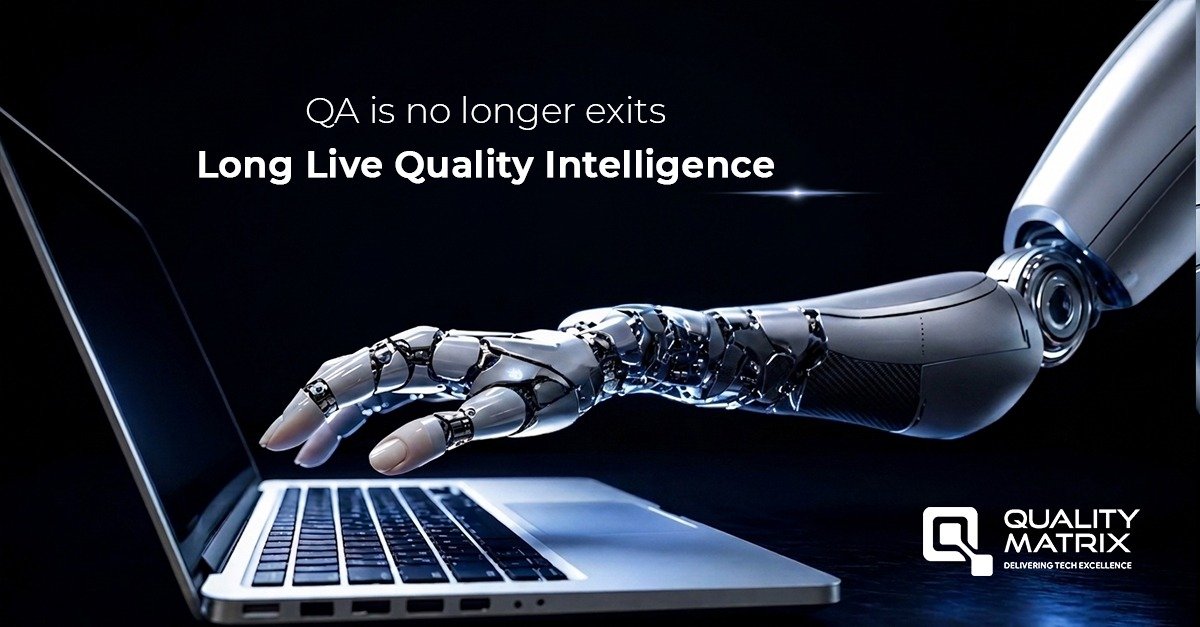
In this environment, the way organizations approach software quality has never mattered more. And for many enterprises, the uncomfortable reality is this: the quality strategy that got them here is not the one that will take them forward. Traditional QA was built for a different era. Today’s software demands something far more advanced. It demands Quality Intelligence.
What Is Quality Intelligence?
Quality Intelligence is not an incremental upgrade to traditional testing. It is fundamentally different philosophy about how software quality should be designed, measured, and continuously improved across the entire development lifecycle.
At its core, Quality Intelligence brings together AI in software testing, predictive analytics, intelligent automation, and risk-based decision-making into a unified quality engineering capability. The outcome is an approach that goes beyond defect detection—it anticipates issues, prevents them, and continuously learns from each release cycle to improve the next.
Where traditional QA asks: Did we catch the defects before release?
Quality Intelligence asks: How do we build systems where defects are less likely to form — and how do we continuously raise that standard over time?
This distinction is not just philosophical—it is strategic. For organizations operating at enterprise scale, it directly impacts release velocity, operational risk, customer experience, and long-term competitive advantage.
Why Traditional QA Is No Longer Sufficient
To understand the value of Quality Intelligence, it helps to take an honest look at where traditional QA consistently breaks down
Defects are caught too late. In traditional models, validation begins after development is complete. By the time defects are identified, the cost of fixing them has already multiplied. When issues reach production, the impact extends beyond engineering effort to customer trust, operational stability, and revenue exposure.
Automation creates false confidence. Most enterprise automation suites are built around documented, happy-path scenarios. They confirm expected behavior under ideal conditions but rarely challenge how systems behave when conditions deviate. Real users are unpredictable. Integrations fail silently. Traffic exceeds assumptions. The result is a test suite that passes consistently while critical failure scenarios remain untested.
Maintenance consumes ROI. Test scripts break as applications evolve. In fast-paced environments, teams invest continuous effort just to keep automation functional. Over time, more effort goes into maintaining scripts than extracting value from them, steadily diminishing the return on automation.
Quality metrics are disconnected from business outcomes. Metrics such as test cases executed, defects logged, or automation coverage reflect activity—not impact. They indicate what QA is doing, but not whether the system is protecting revenue, supporting customer experience, or enabling business outcomes.
Quality Intelligence addresses these limitations directly—systematically, at scale, and in alignment with what enterprise organizations truly require from a modern quality engineering function.
The Core Elements of Quality Intelligence
AI-Driven Test Intelligence
AI-driven software testing services for enterprises introduce a fundamentally smarter way to make coverage decisions. By analyzing code changes, historical defect patterns, and real-world user behavior, AI can identify the highest-risk areas of an application even before testing begins—ensuring that effort is focused where the probability of failure and business impact are greatest.
The result is more targeted coverage, faster feedback cycles, and a measurable reduction in defects reaching production.

Intelligent Test Automation and Self-Healing Frameworks
Intelligent test automation and self-healing frameworks represent a structural evolution beyond traditional automation. In modern development environments, where application interfaces change frequently, self-healing automation detects broken scripts, identifies the root cause, and repairs them autonomously.
This significantly reduces the maintenance overhead that has historically eroded automation ROI in enterprise QA programs. Test suites remain stable and valuable across the product lifecycle. Engineering capacity is freed up and redirected toward higher-value quality initiatives. And release confidence increases because automation becomes genuinely reliable—not just theoretically reliable.
Risk-Based Testing Strategy
Not all functionality carries the same level of business risk. A payment transaction failure, a compliance reporting error, or a data integration breakdown has consequences that far outweigh a minor display issue on a secondary screen.
Risk-based testing ensures that quality efforts are focused where they matter most. High-impact, high-risk workflows receive deep, scenario-driven coverage, while lower-risk areas are validated efficiently through intelligent automation. The result is a quality engineering approach that maximizes business protection in every testing cycle.
Continuous Quality Engineering
Continuous testing in DevOps, powered by AI tools, embeds quality validation directly into CI/CD pipelines, providing real-time feedback with every code commit. Quality is no longer a gate at the end of the development cycle—it becomes a continuous discipline running alongside development, identifying defects when context is fresh, fixes are less costly, and delivery impact is minimal.
This is what enables high-performing engineering organizations to increase release velocity without accumulating quality debt. Speed and quality are no longer opposing forces. With continuous quality engineering, they become complementary outcomes of a well-designed system.
Real-World Performance Validation
Performance testing services for high-traffic applications ensure that systems are validated under realistic conditions—using load profiles derived from actual production traffic, failure injection scenarios that expose architectural weaknesses, and stress testing that pushes systems to and beyond expected peak demand.
For organizations in banking, financial services, healthcare, retail, and e-commerce—where performance failures in real-world conditions carry direct financial and reputational consequences—this level of performance engineering is not optional. It is foundational.
What Quality Intelligence Delivers for Your Organisation
The transition from traditional QA to Quality Intelligence is ultimately a business decision—and the business case is clear.
Organizations that adopt AI-powered quality engineering solutions consistently see measurable improvements across the metrics that matter most to enterprise leadership :
Production defect rates decline significantly, with leading organizations reporting reductions of 30–50% compared to traditional QA approaches. Release cycles accelerate as continuous quality feedback eliminates late-stage remediation bottlenecks. Engineering capacity is recovered from maintenance overhead and redirected toward product innovation. And quality metrics become directly aligned with business outcomes—customer experience stability, system availability, and delivery confidence.
Perhaps most importantly, Quality Intelligence reshapes how organizations perceive quality itself. It shifts the conversation from cost center to strategic value—from a checkpoint at the end of delivery to a continuous source of competitive advantage.
How Quality Matrix Enables Quality Intelligence
At Quality Matrix, we have spent over two decades helping enterprises build quality engineering capabilities that are reliable, scalable, and closely aligned with business outcomes.
Our TGen AI platform delivers intelligent test automation, self-healing frameworks, predictive defect analysis, and AI-driven test generation—seamlessly integrated into existing development and delivery pipelines with minimal disruption and measurable impact from the first engagement.
Beyond the platform, we bring deep domain expertise across banking and financial services, healthcare, insurance, retail, manufacturing, and technology—ensuring that quality intelligence is not only implemented effectively, but also aligned with how your organization operates.
We do not simply layer testing tools onto existing processes. We work with organizations to redesign how quality is architected, resourced, and continuously improved—so it becomes a driver of delivery confidence, not a constraint within it.
The Bottom Line
Traditional QA had its place. In a simpler, slower world, detecting defects before release was sufficient.
That world no longer exists.
The organizations that will lead over the next decade are not those that test more, but those that test smarter—embedding quality intelligence into every stage of how they build, every release they ship, and every system they deliver to the customers who depend on them.
Quality Intelligence is not the future of QA—it is the present, and the organizations adopting it are already moving ahead.
The smarter way to build reliable software starts here.
Your systems are evolving—your quality strategy should evolve with them.
Connect with the Quality Matrix team today to explore how Quality Intelligence can transform your approach to testing—from reactive validation to intelligent, continuous quality engineering designed for modern software delivery.
Frequently Asked Questions
Quality Intelligence is an AI-driven approach to software testing that is proactive, continuous, and aligned with business outcomes. Unlike traditional QA, which detects defects after development, Quality Intelligence anticipates risks before they occur—making quality a strategic function rather than a final checkpoint.
AI analyzes code changes, historical defect patterns, and user behavior to identify high-risk areas before testing begins. This enables smarter coverage decisions, faster feedback cycles, and a measurable reduction in production defects—transforming quality from reactive validation into predictive intelligence.
Self-healing frameworks use AI to automatically detect and repair broken test scripts when application changes occur, eliminating the manual maintenance overhead that consistently erodes automation ROI. The result is automation that remains functional, reliable, and valuable across the entire product lifecycle.
Yes. Quality Intelligence is especially valuable for organizations operating complex, high-traffic, or regulated systems—including banking, financial services, healthcare, insurance, retail, and e-commerce. Whether scaling rapidly or managing enterprise-level complexity, intelligent quality engineering adapts to your risk profile and business objectives.
The best starting point is a quality assessment—understanding where your current QA approach has gaps, where risk is concentrated, and where intelligent automation can deliver the most immediate value. At Quality Matrix, we help organizations make this transition with minimal disruption and measurable impact from the very first engagement.
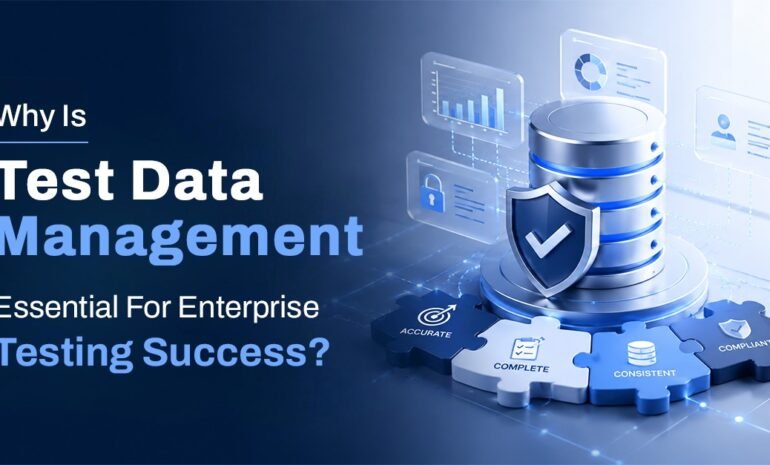
Why is test data management essential for enterprise testing success?
A QA team executes a comprehensive regression suite before releasing a major banking platform update. All test cases pass, and the release is deployed successfully.However,
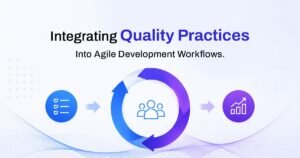
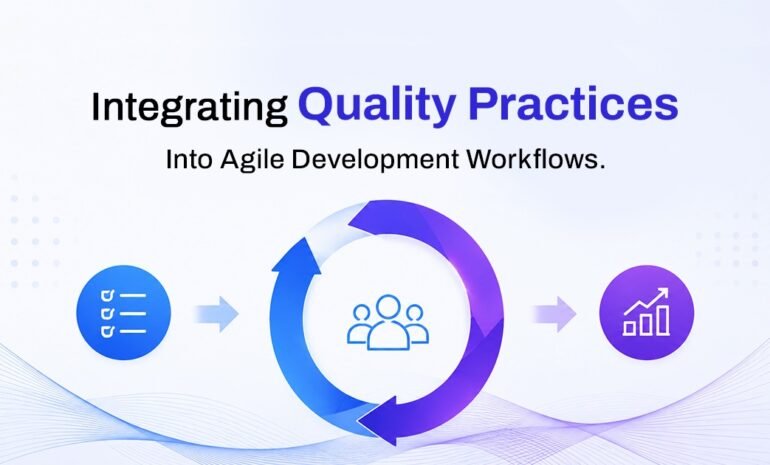
Integrating Quality Practices Into Agile Development Workflows
Speed without embedded quality does not accelerate value—it accelerates risk. Many enterprises adopting Agile development have experienced this firsthand: a defect escapes into production, investigations
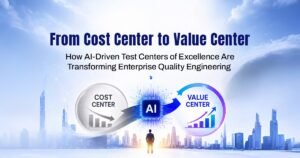
From Cost Center to Value Center: How AI-Driven Test Centers of Excellence Are Transforming Enterprise Quality Engineering
Many enterprises still view software testing as a necessary cost of software delivery. Budgets are allocated to quality assurance, teams are staffed, and tools are

Retail Supply Chain QA: Ensuring Data Integrity and Process Reliability
Retail supply chains do not fail because of bad strategy. They fail because of bad data. The inventory count that appeared accurate—until it was not.

Why Insurers Need Specialized QA for Digital Platforms
Insurance software is not complicated. It is consequential. That distinction matters more than most technology leaders in the insurance industry are willing to acknowledge because
7 Reasons Why You Need a Testing Center of Excellence (TCoE)
Most enterprises make the same mistake when the conversation about a Testing Center of Excellence begins. They frame it as a testing decision. It is